|
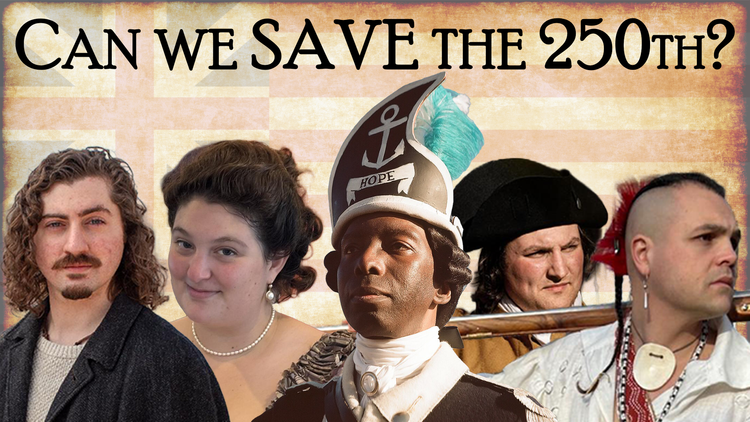
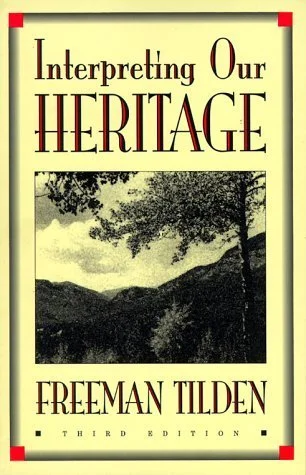
Much of what I know about presenting history has been learned “on the job,” so to speak. With every film, video, and screening, I grow as a historian and a communicator. However, another historian and good friend of mine, Jane Marie (who will be joining me for the ‘250’ panel on 6/29), turned me on to Freeman Tilden’s superb instruction on making history engaging for the public. The concept of “interpreting” history differs from how academics present it, even though interpreters rely heavily on academic research. For traditional historians, people are coming to them. Interpreters, however, have to meet the public physically and emotionally. Emotions play a significant role in how we understand our past, and Freeman Tilden stresses this in his “Six Principles of Heritage Interpretation”: "The chief aim of Interpretation is not instruction, but provocation." "Any interpretation that does not somehow relate what is being displayed or described to something within the personality or experience of the visitor will be sterile." "Information does not equal interpretation, but all interpretation contains information." "Interpretation is an art which combines many arts regardless of subject material. Any art is to some degree teachable." "Interpretation should aim to present a whole rather than a part." "Interpretation for children must be designed specifically for children, and not simply a dilution of programs and information for adults."
To some extent, I have been following most of these principles in my work. The genius of this book, however, is in how Tilden elaborates on these points. The following line is perhaps my favorite in the entire book. “It may not be too much to say that most history may be interpreted effectively by provoking the thought, (under like conditions, what would you have done?).” Providing information and asking questions that place the viewer in the time period you are interpreting opens their mind and heart, creating an empathy that will not soon be forgotten. A wonderful instruction for those who engage the public in history, as well as those who want a deeper understanding of how historical interpretation was, as an art form, created and expanded.
|