
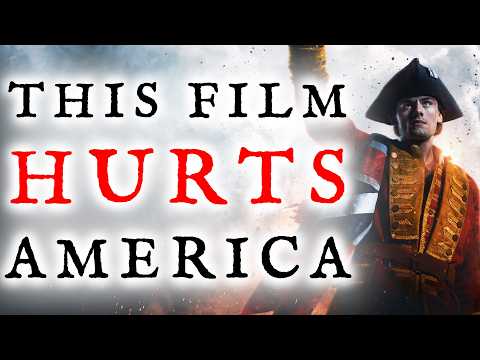
"Young Washington" is a terrible film that warps history to push Christian Nationalism and American Exceptionalism. Oh...it's also AI Slop.

This discussion was held virtually with the Anti-Racist Community Network (ARCN), a project of the Center for the Study of White American Culture (CSWAC).


In this first episode of "Hometown Historians," I sit down with the Master Storyteller, Jonathan Kruk, to discuss the 250th Anniversary, how the American Revolution is being treated, and what lessons we may learn from these stories.

The 250th Anniversary of our nation’s founding is a failure. Discussions on our history have been, at best, vacuous and are, at worst, propagandistic. Even the most well intended reflections of Revolutionary War history have been muted and sanitized, an indication that the most emblematic element of this year is the elephant that now lives in every room in America. Is there anything worth commemorating when we cannot honestly look at our past?

After thousands of concertgoers were attacked during the Peekskill Riots of 1949, the same system that sanctioned this violence began rewriting history to be as though it never happened. History is repeated by those who do not learn it, which is why they will do everything to ensure you can’t either.

30,000 fans of Paul Robeson would be attacked after attending his concert outside Peekskill, NY. Despite an unprecedented level of police protection promising to quell any violence, the largest race riot in the region would unfold before the eyes of the world.

Paul Robeson's concert was attacked by a racist and Anti-semitic mob outside of Peekskill, NY. The violence would become a national scandal, as anti-communist rhetoric had now culminated in physical violence.

To understand Peekskill during the Riots, we must first understand the forgotten past of the “Friendly Town” by the River.
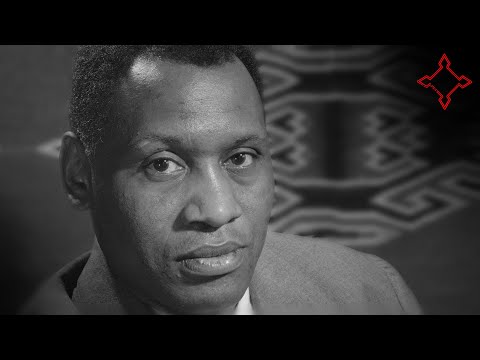
The first episode of The Peekskill Riots docu-series explores the life and times of Paul Robeson, the first and last casualty of the 1949 riots.

This is the story of how a mysterious, leather-clad wanderer who roamed the roads of New York and Connecticut 165 years ago, became a local legend in the region.
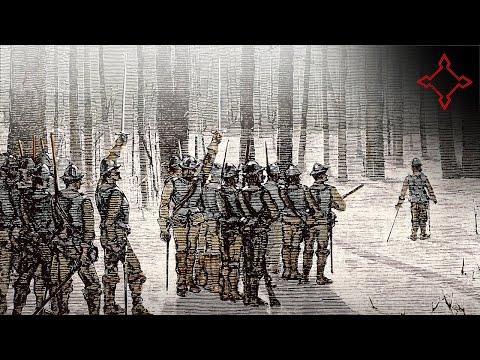
This is the story of the Pound Ridge Massacre (March, 1644), the Dutch colony of New Netherland (New York), and the Indigenous “River Tribes” of the Hudson River Valley.